
Parallel cluster rendering (or Distributed rendering) is a method
used to improve the performance of computer graphics
creation software.
The rendering of graphics requires
massive computational resources for complex objects like
medical visualization, iso-surface generation, and some CAD
applications.
Traditional methods like ray tracing, 3D
textures, etc., work extremely slowly in simple machines.
Furthermore, virtual reality and visual simulation programs,
which render to multiple display systems concurrently, are
applications for cluster parallel rendering.
Parallel rendering divides the work to be done and processes
it in cluster parallel. For example, if we have a non-parallel
ray-casting application, we would send rays one by one to
all the pixels in the view frustum.
Instead, we can divide
the whole frustum into some x number of parts and then run
that many threads or processes to send rays in parallel to
those x tiles. This is parallel
rendering.
High-availability clusters (also known as failover
clusters) are implemented primarily for the purpose of
improving the availability of services which the cluster
provides.
HA cluster
implementations attempt to manage the redundancy inherent in
a cluster to eliminate single points of failure.
For
applications that require higher reliability and
better system management delivering a balanced highly-available
supercomputer cluster building block for a wide range of HPC
applications such as Computational Fluid Dynamics, aerospace
and automotive engineering simulations, petroleum
exploration and production, scientific visualization for oil
discovery and recovery, research in seismic, weather and
environmental sciences, defence and classified research
production.
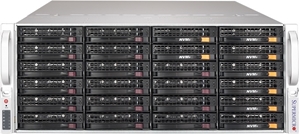
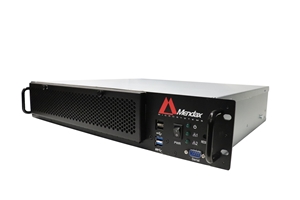
Our storage cluster and rendering servers can also have
the purpose of providing a location for the storage of
computer files (such as documents, sound files, photographs,
movies, images, databases, data and any other computer
files.) that can be accessed by the workstations that are
attached to the computer network or to other computers on
the same network.
Our servers allow users to share information over a
network without having to physically transfer files by
floppy diskette or some other external storage device. In a
more sophisticated network, our cluster and rendering
servers might be a dedicated network-attached storage (NAS)
device that also serves as a remote hard disk drive for
other computers, allowing anyone on the network to store
files on it as if to their own hard drive.